
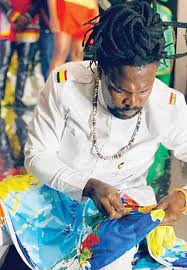
Court clears Latif Madoi, but fashion designer’s life remains in ruins
|BICHOLIN.K MUSISI| HUNTER FM RADIO 105.0 | kampala | It was a long- awaited sigh of relief for veteran fashion designer Latif Madoi, as the Kasangati Grade One Magistrate’s court officially dismissed the criminal case against him on April 4, 2025.
Presiding magistrate Edger Nyakairu dropped the charges for “want of prosecution” under Section 119 of the Magistrates Courts Act—a legal term meaning the state failed to move forward with the case.
For Madoi, 47, the ruling marked the end of a nearly year-long ordeal that began with a high-profile arrest in May 2024. But while his legal slate may now be clean, the damage to his life and career remains painfully visible.
Madoi was arrested on May 13, 2024, at his LA Fashion and Skills Development School in Jokolera village, Kasangati. Eyewitnesses recall a dramatic scene: a convoy of armed officers—some in military camouflage, others in plain clothes—stormed the school, detaining Madoi and four of his students.

The charges? Allegations that Madoi was producing military-style attire for supporters of the opposition National Unity Platform (NUP), led by Robert Kyagulanyi Ssentamu, popularly known as Bobi Wine.
While Madoi admitted to tailoring outfits for Kyagulanyi—strictly on a paid, professional basis—he insisted he was never involved in any political activity. Nonetheless, he was remanded to Kasangati prison from May 17 to June 24, 2024, during which, he says, he suffered humiliating treatment.
“My dignity was abused to the core,” Madoi recounted in a previous interview with The Observer. “I was given a torn uniform with holes in the back. The armpits stank so badly that I walked with my arms outstretched to avoid skin contact.”
He also shared the trauma of having to cut off his signature dreadlocks, which he had worn for 17 years—an act that many viewed as symbolic degradation. With the court now dismissing the charges, Magistrate Nyakairu also ordered the release of Madoi’s bail money, the return of all property seized during the arrest, and the discharge of his sureties.
According to the police’s own search certificate, several items were taken from his premises, including camouflage fabrics, tailoring equipment, school documents, and even a raincoat and red threads—items Madoi insists were simply part of his fashion inventory.
But even as his name is cleared, Madoi says the stigma has left his business in ruins.
“I haven’t registered a single new student since my arrest,” he lamented.
“Parents are scared off by the narrative that I train students to make illegal uniforms. It’s false, but the damage is done.”
An attempt to expand his business with a new branch in Makerere has also stumbled.